
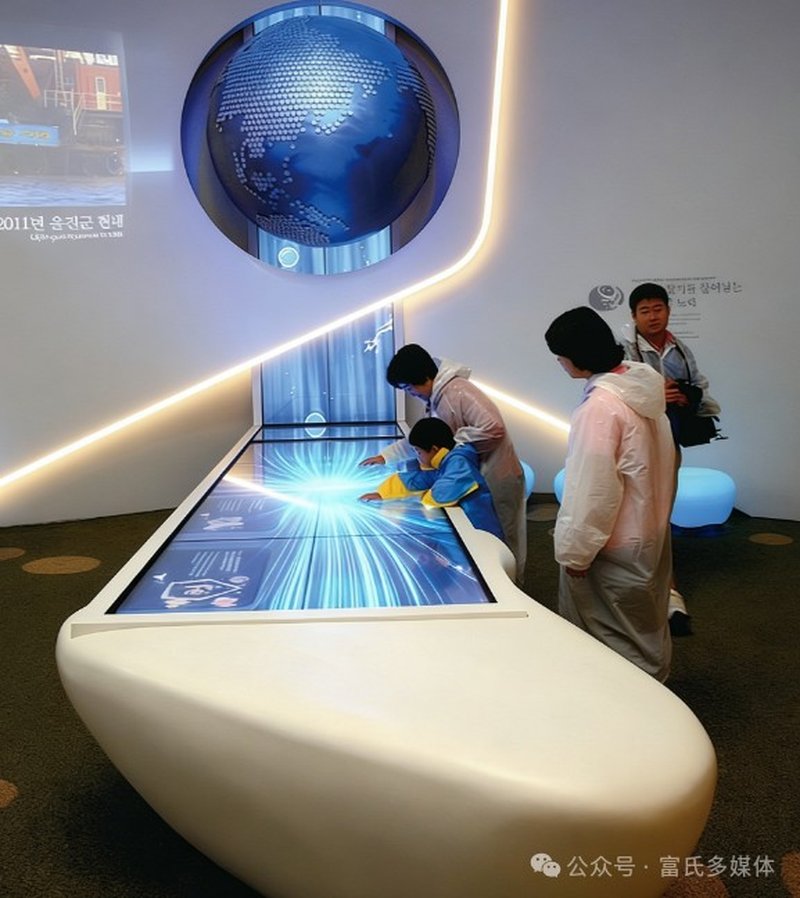
Deploying a commercial-grade Waterfall Interactive Touch Table provides interactive venues with an advanced digital display platform. When digital information cascades downward like a waterfall of light and shadow, seamlessly merging into an interactive tabletop world, an innovative exhibition experience fusing visual presentation and touch interaction comes to life. By integrating vertical visual displays with tabletop touch interaction, waterfall touch tables transform traditional information browsing into a dynamic process that visitors can watch, operate, and explore. They are ideally suited for science and technology showrooms, themed pavilions, and various digital exhibition spaces.
Waterfall Interactive Touch Table: 1. Visual Presentation: Crafting a Cascading Waterfall of Light and Shadow
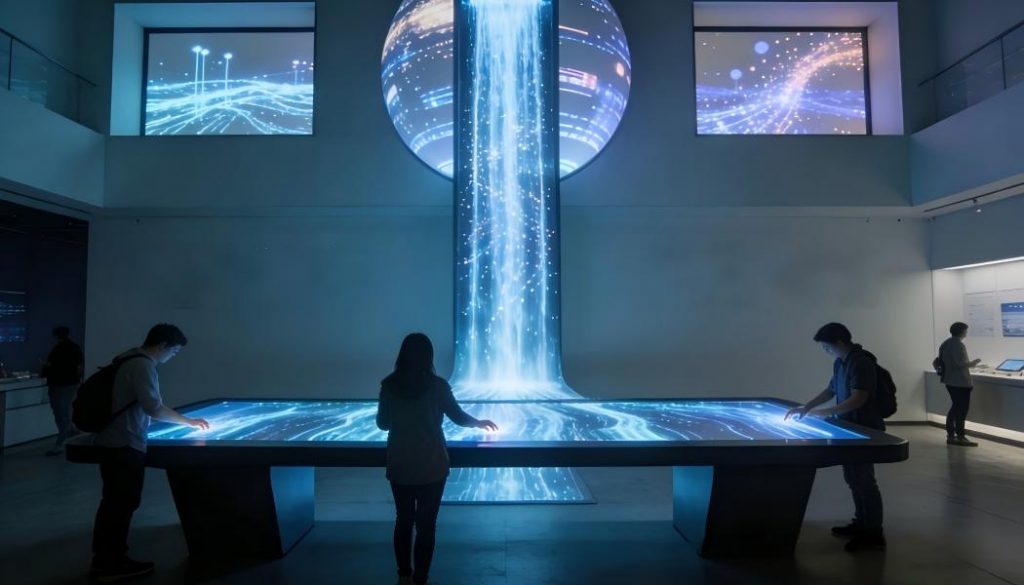
The distinguishing feature of a waterfall touch table is its fusion of dynamic visuals with horizontal tabletop displays, creating a continuous, visually captivating effect.
Depending on specific project requirements, overhead projection systems or vertical display units can showcase flowing water, particle effects, or data streams. This allows visuals to extend downward along a vertical plane and visually connect with the touch table below. Through calibrated visual design and system engineering, a coherent visual flow is established from the upper display zone down to the tabletop interaction surface.
These flowing digital streams can carry raw data, scientific knowledge, product portfolios, or cultural narratives, presenting abstract information to audiences in a remarkably intuitive and engaging manner.
By harmonizing dynamic imagery with architectural space planning, waterfall touch tables enhance the visual allure of showrooms and cultivate a deeply immersive visitor journey.
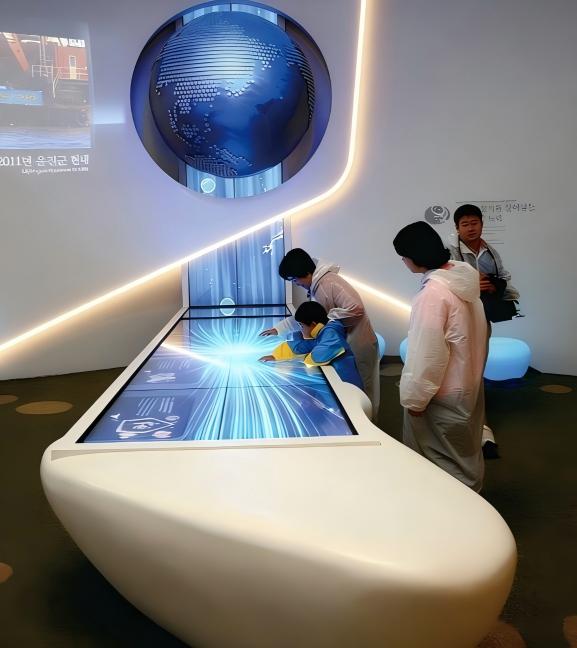
2. Interactive Evolution: Exploring Flowing Information at Your Fingertips
The core appeal of a waterfall touch table lies in uniting dynamic visual spectacles with responsive tabletop touch operation. Audiences can not only watch the light and shadow animations cascading from above, but also actively navigate digital content on the tabletop via tapping, swiping, and dragging.
Depending on the interactive software architecture, visitors can tap designated graphics or data nodes to view corresponding texts, high-resolution imagery, and video clips. They can also switch exhibition themes, browse distinct information categories, or zoom in on selected content directly from the tabletop interface.
Advanced interactive schemes can further incorporate content selection, dragging, and assembly features, creating a direct physical-digital connection between user actions and digital assets.
This presentation methodology—first capturing audience attention with dynamic visual streams, then facilitating deep content exploration through tabletop touch—guides visitors from passive viewing to active discovery, significantly enhancing engagement, fun, and participation.
3. Broad Applications: Adapting to Diverse Exhibition Themes
Waterfall touch tables can be custom-tailored around showroom themes, display content, and physical layouts, making them versatile across numerous digital exhibition and science popularization settings:
Science & Technology Museums and Natural History Pavilions: Waterfall visuals can simulate the water cycle, complex ecosystems, or atmospheric phenomena. Visitors interact with the tabletop to inspect related images, scientific explanations, and multimedia demonstrations, rendering complex scientific concepts readily understandable.
Corporate Showrooms and Industrial Exhibition Halls: Dynamic visuals can portray industrial supply chains, technological roadmaps, and product architectures. Visitors touch the table to explore individual phases, gaining in-depth insights into product engineering, technical specifications, and real-world applications, adding substantial depth to corporate storytelling.
Museums and Cultural Heritage Centers: The waterfall display can chronologically link historical milestones, cultural lineages, and thematic narratives. Tabletop touch functionality presents high-resolution artifact imagery, historical archives, and contextual commentaries, empowering visitors to delve into history based on their personal interests.
Aquariums and Environmental Protection Pavilions: Dynamic flows can simulate ocean currents, ecological shifts, and resource circulation. Paired with tabletop multimedia resources and interactive modules, they effectively educate visitors on marine biology and environmental conservation.
By fine-tuning visual aesthetics, information architecture, and interaction modalities, waterfall touch tables adapt effortlessly to diverse exhibition themes, delivering richer storytelling and heightened visitor engagement.
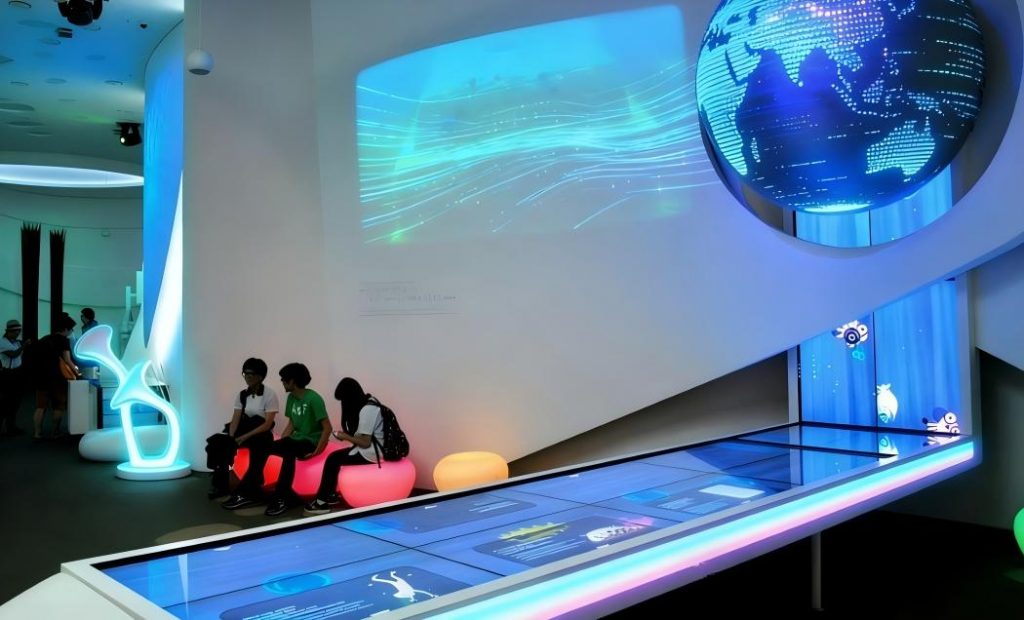
4. Technological Synergy: Harmonizing Visual Displays and Touch Interaction
The compelling display performance of a waterfall touch table relies on seamless synergy among projection/display hardware, touch systems, sensing technologies, and interactive software.
Depending on project specifications, techniques such as projection calibration, image edge blending, and specialized display layouts ensure flawless visual continuity between the upper vertical cascade and the horizontal tabletop.
The touch system detects user gestures and relays commands to the interactive software, enabling instant theme switching, data querying, and dynamic visual control. Specific tracking accuracy, response latency, and available interaction modes are determined by the chosen hardware and system configuration.
Furthermore, exhibition content can be continuously updated to match evolving showroom themes or seasonal requirements—such as refreshing dynamic visual assets, adjusting category structures, and revising interactive modules—ensuring that a single hardware installation adapts flexibly to diverse exhibition mandates over time.
By systematically integrating cutting-edge display equipment, robust touch technology, and curated digital media, waterfall touch tables strike an ideal balance between stunning visual impact and intuitive information retrieval, offering a versatile digital centerpiece for modern showrooms.
5. ZXTLCD Waterfall Touch Table Solutions: Fusing Light and Shadow with Tabletop Interaction
ZXTLCD waterfall touch tables merge dynamic visual effects, vertical display walls, and horizontal touch surfaces. Exhibition solutions can be custom-engineered around specific showroom themes, spatial dimensions, and interaction objectives.
Whether applied to scientific education, industrial showcases, cultural storytelling, or marine and ecological themes, these solutions first captivate audiences with striking light and shadow flows, then deliver comprehensive information through responsive tabletop touch interactions.
Through the holistic integration of visual design, multi-touch operation, and tailored digital assets, ZXTLCD waterfall touch tables elevate the visitor experience from one-way observation to self-driven exploration, delivering multi-layered, interactive storytelling for science centers, corporate showrooms, museums, and thematic pavilions. In conclusion, adopting a professional Waterfall Interactive Touch Table enhances presentation capabilities, engages multi-user audiences, and drives digital transformation.
Looking for customized Waterfall Interactive Touch Table hardware, multi-touch interactive tables, or OEM/ODM commercial display solutions? Feel free to contact the ZXTLCD engineering team for free consultations, product demos, and tailored technical specifications.