
An interactive video touch table helps schools, libraries and education centers turn recorded media into guided learning activities. Instead of asking children to watch a long video, the application can pause at key moments and invite them to sort, draw, predict, compare or discuss. The shared horizontal format supports small groups, while teachers control the lesson sequence, available content and session length.
Break Video Lessons into Active Learning Steps
Short media segments are easier to connect with practical tasks than one continuous presentation. A science animation can lead to a sequencing challenge, a story can pause for language questions, and an art demonstration can open a drawing activity. Each response should provide clear feedback and return learners to the lesson without confusing navigation.
The interactive video touch table should organize material by subject, age and difficulty. Teachers need an obvious way to choose a lesson and preview its goal. Children benefit from large controls, readable labels and a consistent home button. Captions support silent environments and hearing accessibility, while adjustable audio prevents one table from disturbing nearby classes.
Design Group Activities with Clear Roles
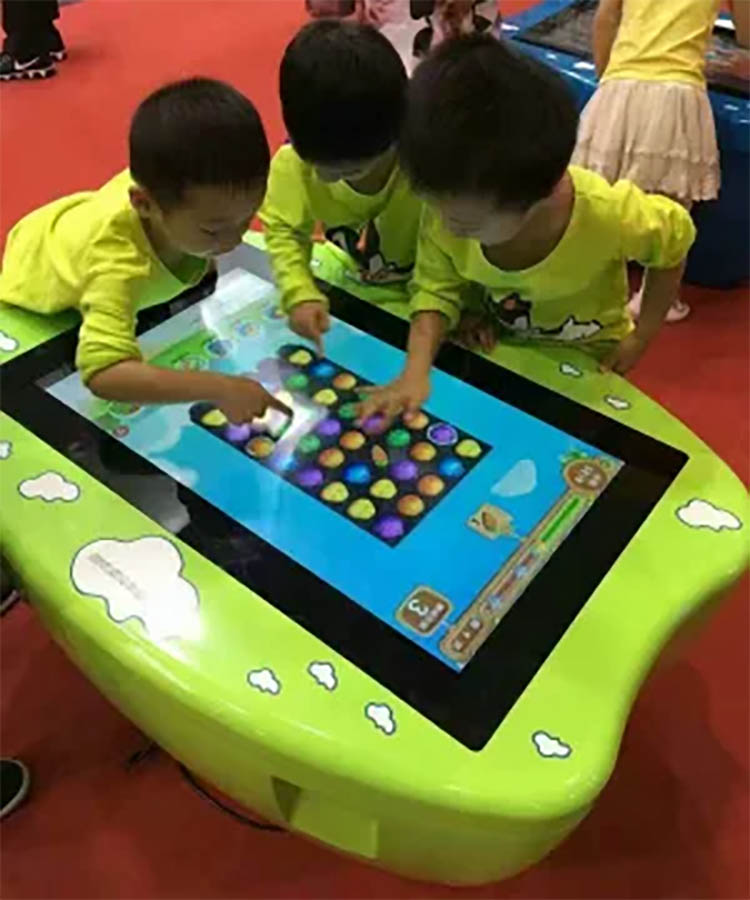
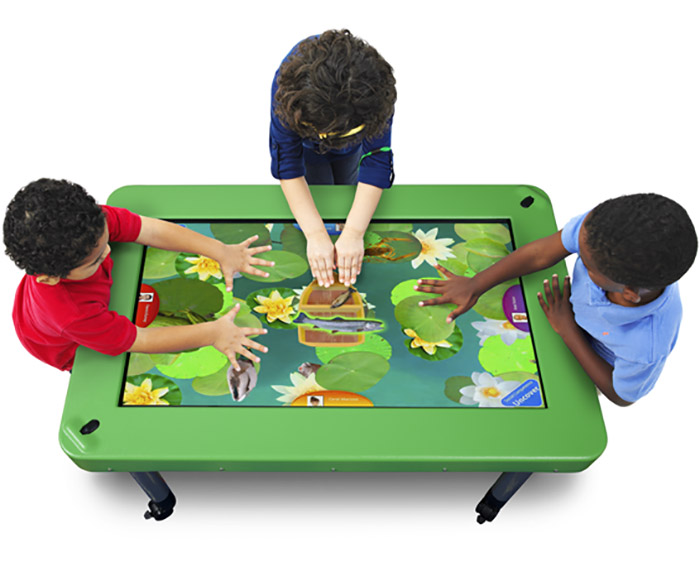
Several learners can participate from different sides, but the software must manage ownership. Personal zones can provide independent questions, while a central area holds shared answers or media. Cooperative tasks should encourage communication and combined decisions instead of rewarding only the fastest user. Visible turn indicators help younger children understand when to act.
Teachers may switch between individual practice, pairs and four-person activities. A lesson can begin with separate exploration and finish with a group comparison. After a session, the application should remove previous answers and return to the approved starting screen. This reset protects privacy and prepares the table for the next class without manual cleanup.
Build a Child-Friendly Touch Interface
Children may touch rapidly, use several fingers or lean against the edge. Tracking needs to remain stable under real classroom behavior. Controls require generous size and spacing, and important text should not sit where hands naturally rest. Immediate animation confirms successful input, but excessive visual effects can distract from the learning objective.
An interactive video touch table also needs a safe physical design. Tempered protective glass, rounded edges, stable support and secured cables help manage daily use. Table height and reach distance should fit the intended age group. Cleaning products must be compatible with the glass and enclosure finish while preserving accurate touch response.
Support Different Learning Needs
Content can provide multiple language options, adjustable difficulty and visual alternatives to audio instructions. Large type, strong contrast and icons with text labels improve clarity. Activities should avoid depending only on color, and timed tasks need a flexible mode for learners who require more time. Accessibility should be reviewed with educators before the interface is finalized.
The interactive video touch table can include creative tools, literacy activities, mathematics practice and guided exploration without forcing every subject into the same template. Open-ended art benefits from free controls, while knowledge exercises require clear questions and explanations. Content should reflect the institution’s curriculum and cultural context.
Choose Hardware for Reliable Video Playback
Processor, memory, storage and graphics capability should be tested with the final resolution, animation and maximum number of active users. Android may suit a focused learning application, while Windows can support customized software and peripherals. Smooth playback, quick transitions and responsive touch feedback matter more than specifications that have not been tested with real lessons.
The system should start automatically, recover after power interruption and prevent children from reaching operating-system menus. Offline storage can keep approved lessons available when internet access is restricted. Authorized updates need a staging review so incomplete media, broken captions or incorrect navigation never reach the classroom application.
Give Educators Practical Management Controls
Teachers should be able to select content, pause an activity, change volume and restart the session without technical support. A simple dashboard can group lessons and show their duration. Usage information should support teaching decisions without collecting unnecessary personal data. Scheduled startup and shutdown may simplify operation in a library or learning center.
An interactive video touch table benefits from a short daily checklist covering glass cleaning, application startup, audio level and touch response. Staff need clear recovery steps and a contact route for issues they cannot resolve. Replaceable computing and power components reduce downtime, while remote support can assist with software diagnosis.
Maintain an Approved Media Library
Video lessons require regular review so outdated explanations, broken captions and incomplete files do not remain available. A staging copy lets educators test navigation, timing and difficulty before release. Clear file names, version records and a backup of the approved package make it easier to restore content after maintenance or a software update.
Validate Education Value and Continuous Operation
Prototype testing should involve representative learners and teachers. Observe whether children understand instructions, collaborate naturally and complete the intended task. Check reach, reflections, response time, audio, session reset and continuous stability. Teacher feedback can reveal whether lesson controls are practical during a real class rather than only during a technical demonstration.
The interactive video touch table should be approved as a complete system including enclosure, glass, computing hardware and final software. ZXTLCD can configure screen size, operating system and structure around the learning environment and content workflow. If you would like to get the specification about above product, contact our sales team now.