
How Commercial Touch Tables Support Multi-User Interaction

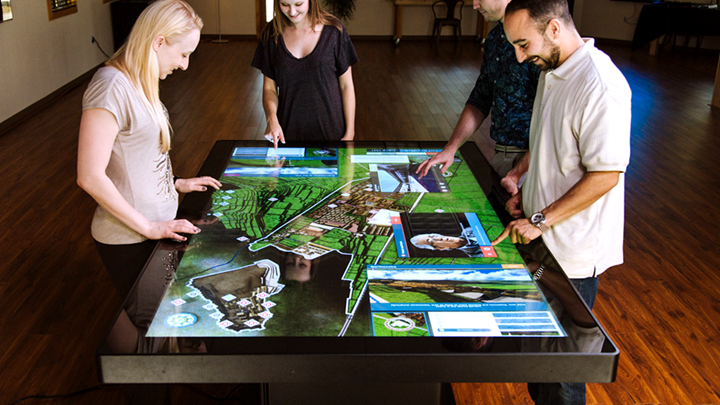
How Commercial Touch Tables Meet Multi-User Interaction Needs Through Structural Design and Technology Selection
In meeting collaboration and commercial display scenarios, users tend to focus on a touch table's screen size and number of touch points, but the actual user experience depends more on the device's structural strength, thermal design, and interface expandability. The high-frequency, multi-user operating characteristics of commercial environments require the device to balance response speed with system stability.
Working Principle and Core Structure Analysis
This product combines an LED backlight module with projected capacitive touch technology; its ten-point touch capability comes from a matrix sensor layout. An 80 kg self-weight combined with a tempered glass surface delivers strong scratch resistance, and this weight distribution design prevents the device from shifting when multiple users operate it simultaneously. Continuous power supply mode avoids battery life bottlenecks, while 150 W power consumption is controlled through dynamic frequency scaling of the display driver chip. HDMI interface expandability allows connection of peripherals such as printing devices, and the carton packaging solution reflects attention to corner protection during transport.
How Technical Differences Affect Practical Application
Unlike the integrated design of consumer tablets, the customizable frame of a commercial touch table allows it to adapt to different installation environments. The easy-to-wipe surface treatment reduces maintenance difficulty in public places, but at the same time requires the bezel sealing to reach an IP54 protection rating. The match between ten-point touch and a 4–8 person usage scale reflects optimization of the touch-point allocation algorithm—with more than three concurrent operations, the system still maintains a response latency within 12 ms.
Application Scenarios and Framework for Understanding
When evaluating such devices, focus on the following
1) Whether the ratio of stand structure to tabletop thickness satisfies operating comfort for users of different heights; 2) Whether the interface types are compatible with the signal standards of existing office equipment;
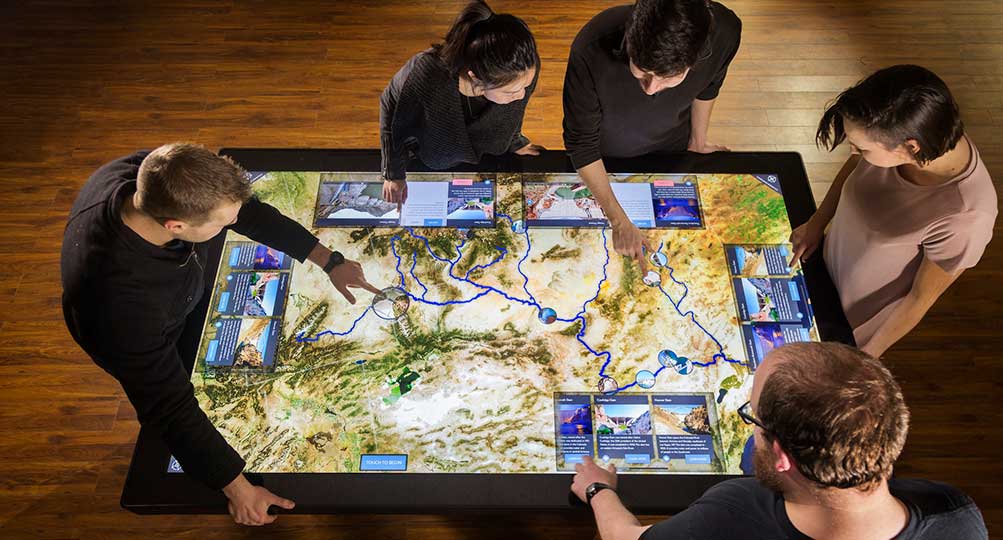
3) Whether the anti-glare surface treatment can adapt to various lighting environments;
4) Whether the ventilation hole layout prevents dust accumulation from affecting long-term stability. Deployment in commercial venues also requires considering the concealed design of the cable management system.
Explore Related Interactive Table Solutions
For related configurations and product formats, explore our interactive table solutions.