
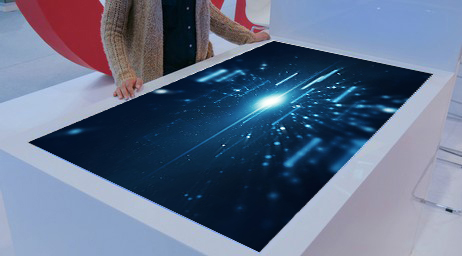
Let visitors initiate the interaction
An object recognition interactive table uses the act of picking up and placing an item to trigger content. The starting point is visible and understandable, so visitors do not need to learn a complicated menu. This lowers the barrier for children, families and people who are unfamiliar with digital exhibits.
Making a physical choice also increases attention. Visitors are not only receiving information; they decide what to view, what to compare and what to do next.
Make abstract relationships understandable
Product systems, urban plans, historical events and scientific principles contain multiple connected elements. An object recognition interactive table can use placement, combination and comparison to show those relationships. One model reveals basic information, while several models reveal differences or connections.
This responsive explanation can answer visitor questions more effectively than a fixed video. It also allows a guide to adapt the presentation to the interests of the group.
Support shared learning and discussion
A horizontal surface allows several people to gather around one subject. Software can provide personal work areas and a shared center so participants explore first and then combine results. Schools, museums and corporate reception areas can all benefit from this collaborative structure.
Multi-user design must control window quantity, direction and accidental touch. Readability and order are more important than simply increasing the maximum touch-point count.
Keep exhibition content updateable
Physical graphics are expensive to replace, while digital media can evolve. When objects and content records are managed separately, the same token can open new material during a later exhibition phase. Languages, cases and specifications can also be adjusted.
An object recognition interactive table still needs approval and version management. Default pages, offline content and recovery procedures keep the exhibit available when a network or media file has a problem.
Turn benefits into acceptance criteria
ZXTLCD can configure an object recognition interactive table around exhibition theme, object set, user count, software and enclosure design. Benefits should become testable goals: can a visitor start independently, can several users finish a task, and can operators update content efficiently?
A prototype, site testing and operator training transform the object recognition interactive table from an attention-grabbing demonstration into a dependable long-term exhibition tool.
Measure meaningful participation, not only touches
A high touch count does not automatically mean the exhibit is successful. Repeated touches may indicate that the starting point is unclear or the response is too slow. More useful measures include completion of a content path, use of comparison, participation by more than one person and whether visitors can describe the central idea after the session.
Operators should combine system data with floor observation, guide feedback and maintenance records. This helps distinguish a content problem from poor placement, an unattractive object or a hardware fault. For example, low use may result from glare or blocked access rather than the story itself. A monthly review can select a small number of changes, test their effect and retain the improvements. In this way, the object recognition interactive table continues to develop through evidence rather than assumptions.
Make Training Part of Formal Delivery
Operator training should be part of formal delivery. Venue staff need to perform startup, content switching, token replacement, cleaning, recovery and fault recording themselves rather than only watch a demonstration. A short practical test confirms that the handover is understood. When responsibilities change later, the same procedure helps train new staff and preserves consistent operation of the object recognition interactive table without relying on one individual who participated in the original installation.